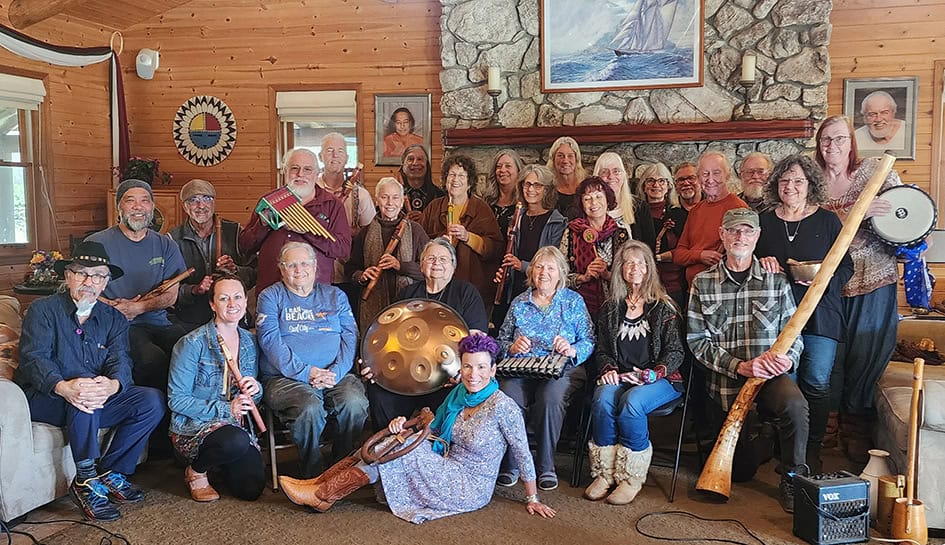
• by Dawn King • photo by April Juels • Today, I found myself reflecting on the music gathering we had last Saturday at Sunburst. People came from near and far corners of California to play and listen to impromptu performances. Mostly the instruments were windblown—Native American style and other flutes, including a didgeridoo, with drums and hand-held percussion. Some years we have participants from out-of-state. This annual event is always well attended, and very enjoyable; some of the musicians are world-class professionals.
What I reflected on this morning was finding myself thinking, “I wish this moment would never end.” Right then, my husband was playing a Native American style flute while a friend was playing a Japanese bamboo flute (shakuhachi). It was such a beautiful moment of harmony, and breath. Every onlooker was rapt with enjoyment. The consciousness of the whole room was raised to a high vibration. It felt as though we were all beyond any thoughts, simply suspended in the exquisite beauty, peace, and perfect harmony. We were in a moment of Heaven on Earth—everything was perfect.
It is my good fortune to have had a number of these Heaven-on-Earth moments, times when I’ve wished the moment would never end. Today I realized that this euphoric feeling is the enjoyment of being in a state of illumination, or Christ consciousness. One’s higher senses, and deeper heart’s love are experienced so intensely, with so much joy. These are moments in which we may find ourself moved to tears—tears of joy.
My greater realization today is that this transcendent experience is available to us EVERY moment. We only need to see/hear/feel the perfection of every moment of life. Through the eyes of the Divine Creator, ALL is perfect. And no moment in time is ever lost from the memory of the Creator.
Our challenge today is to be fully here NOW. The NOW is all that exists, and in the NOW, as you read this, you are FINE. How many moments we have in which we are fine, secure, needing nothing more than to breathe! The more we consciously realize this, the more of these “perfect” moments we will have. We were not created to suffer, but created to enjoy living. We have to allow ourselves to hold that thought, and find the Good, the Beauty, the Love that is available to us. We need only embrace and nurture that which brings joy to our hearts.
The Earth is freeing itself from the negativity which has inadvertently polluted its aura. There may be increasing fires, floods, earthquakes, etc. as this cleansing takes place. Be assured that this is only increasing a pull to Spirit within humankind, like no other time.
Fear comes from thinking we are alone, or not good enough. We are never alone, and we are made in the perfect image of our Creator. All we need do is ask Divine Spirit for help, and it will come. Sometimes it comes from our own realization of the next steps we need to take. We are to empower ourselves by realizing our oneness with the Divine, and offering our gifts to others, to Nature, to the Earth. It starts with our own consciousness, NOW.
Postscript • Before posting this blog, I shared it with a friend who is a long time Zen Buddhist. He commented:
I like what you said in your blog article. The only reality is the present moment. The Divine is always with us.
In Buddhism, everything comes from the same source, yet everything is always arising and disappearing.

A person can fail many times, but they are not a failure until they begin to blame somebody else.
• Excerpt from Thich Nhat Hanh • When you plant lettuce, if it does not grow well, you don’t blame the lettuce. You look for reasons it is not doing well. It may need fertilizer, or more water, or less sun. You never blame the lettuce.
Yet if we have problems with our friends or family, we blame the other person. But if we know how to take care of them, they will grow well, like the lettuce. Blaming has no positive effect at all, nor does trying to persuade using reason and argument.
That is my experience. No blame, no reasoning, no argument, just understanding. If you understand, and you show that you understand, you can love, and the situation will change.
• More Notes on Blame and Success in Life •
When there is a problem, the best approach is to figure out the root cause. There can be a tendency to place blame, especially on others. Embracing accountability and responsibility helps us realize how we can do better as individuals, and as a group.
This requires an inner and outer environment in which it’s okay to accept responsibility; it’s okay to acknowledge you’ve made a mistake if you have. Then we need to move on in our thinking. Often the root cause of a problem is simply miscommunication, misunderstanding, or lack of information.
Introspection is vital for spiritual growth. It is helpful for group endeavors as well—periodical review of how well we’re doing.
Personal introspection and Self-affirmation helps us grow up as individuals—to assess our progress on meeting our goals in life, and on being who we want to be. Likewise a group with a common vision (be it a family or a company) with self-organizing teams and good infrastructure, makes forward progress and detects problems quickly. And this is a perfect environment for individuals to feel like they are contributing.
The blame game is not for us. Being motivated by a heart of love and kindness benefits us all.
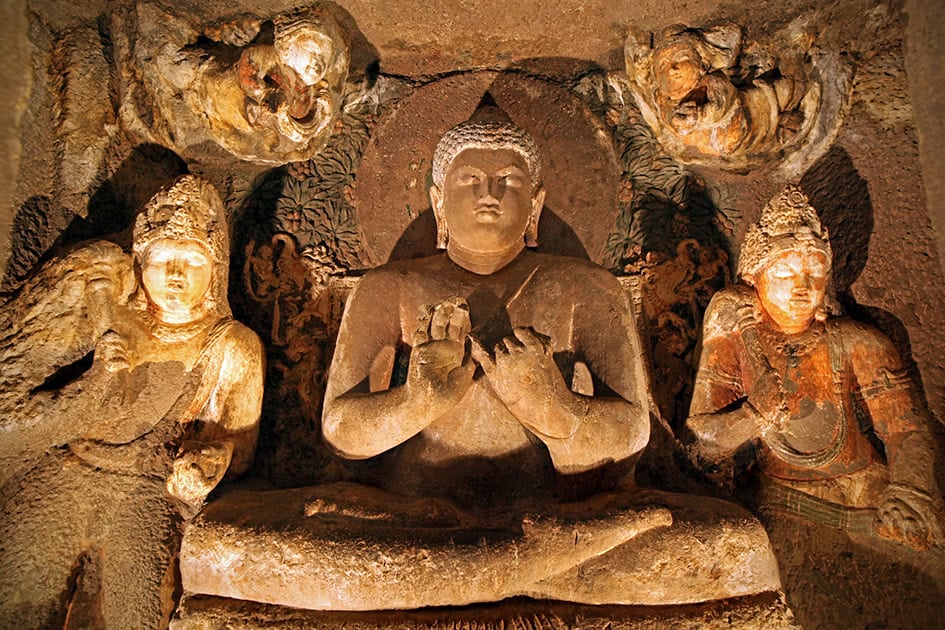
• by Dawn King • Hidden, or buried treasure awaits our discovery! This treasure, we’ll find, is worth more than diamonds and gold. It is the wealth of joy, strength, and contentment continuously revealed in new ways as we mine the depths of Spirit.
By Spirit, I mean that Life within us, our innate mystical oneness with our Creator. Just as our DNA connects us to all those souls who precede us, the Life within us is our connection to ALL that exists, and its Source. Acknowledging “all that exists” includes, for me, a growing conscious understanding of the whys and hows—the answers to my questions about Life.
Because our everyday consciousness is so limited, we expand beyond it by exploring our feelings and intuition. These seem to be in another realm, other than the physical…and they are. Ever more “treasure” is uncovered as we “listen” to our intuition, and are conscious of our feelings. An introspective and meditative mind is a great tool in this endeavor, one we should maintain. Then it will never cease to entertain us.
Wayne Dyer reveals: The essential lesson I’ve learned in life is to just be yourself. Treasure the magnificent being that you are and recognize first and foremost you’re not here as a human being only. You’re a spiritual being having a human experience.
You might enjoy the following variety of quotes about finding hidden treasure:
It is by going down into the abyss that we recover the treasures of life. Where you stumble, there lies your treasure. – Joseph Campbell
Health is the greatest possession. Contentment is the greatest treasure. Confidence is the greatest friend. Selflessness is the greatest joy. – Lao Tzu
Treasure your relationships, not your possessions. – Anthony J. D’Angelo
A box without hinges, key, or lid, yet golden treasure inside is hid. – J.R.R. Tolkein
Guard well within yourself that treasure, kindness. Know how to give without hesitation, how to lose without regret, how to acquire without meanness. – George Sand
To truly cherish the things that are important to you, you must first discard those that have outlived their purpose. And if you no longer need them, then that is neither wasteful nor shameful. Can you truthfully say that you treasure something buried so deeply in a cupboard or drawer that you have forgotten its existence? – Marie Kondo
If love is the treasure, laughter is the key. – Yakov Smirnoff
Happiness is your own treasure because it lies within you. – Prem Rawat
Treasure the love you receive above all. It will survive long after your good health has vanished. – Og Mandino
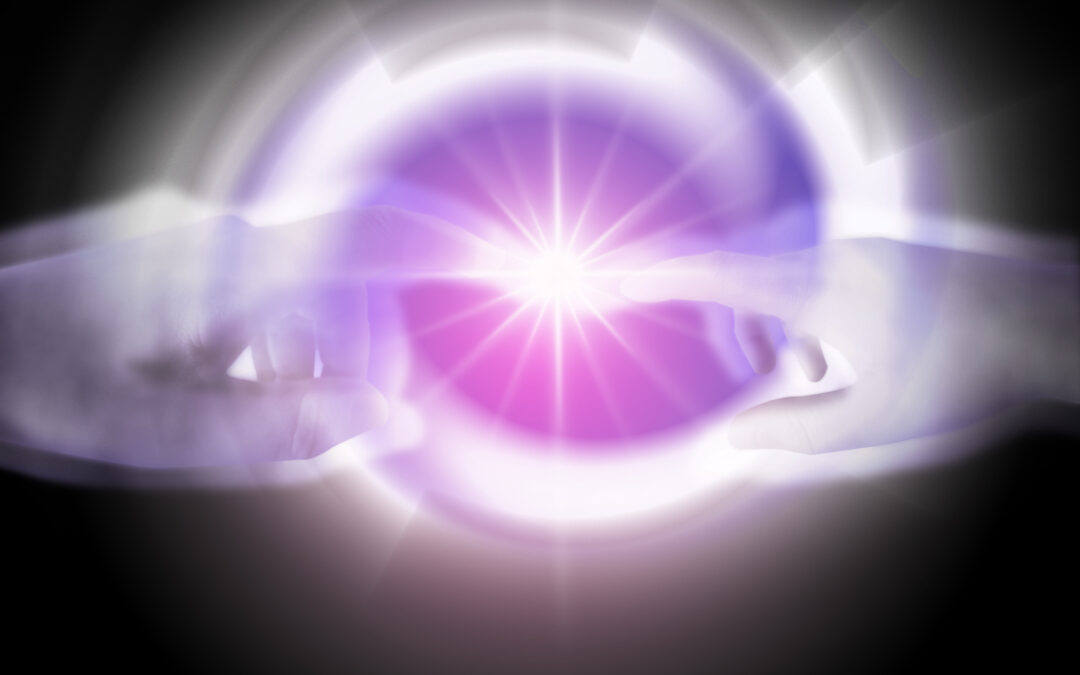
• by Norman Paulsen, Sunburst’s founder • In the beginning was the great ignition and explosion of light and life force. Everything that exists originated at that point in deep space: spinning galaxies, star systems, planets, and all life forms including these bodies that we find ourselves encompassed in today.
Each of us is directly connected to the Source, the first ignition, through an inner-dimensional tunnel of light. This tunnel can be seen in deep meditation by the grace of Spirit, and sometimes through accident or illness. Every human being is connected. This means every human being can see God face to face—can see the center of creation, the light where it all began.
The experience is of seeing the impossible being possible; this incredible vision staggers the self-conscious mind. It goes reeling away with all its former concepts of what the world is, what God is, and what life’s about. All concepts are being destroyed in the immensity of the stupendous reality of this experience.
The self-conscious mind wants to believe that God is alive, but it has no proof. We want to believe we are immortal and we’re going to gain a heavenly place, but we don’t have any proof. This event is more than the proof; it’s the direct experience of immortality. In that moment, looking into that Light and Presence, the most wondrous thing is that it is personal!
Yes, the light you see at the end of the tunnel, appearing brighter than our physical sun, begins to speak through audible thought transference. You hear a voice that is seemingly coming from all space, but it’s directed to you personally through inner space.
There’s a personal relationship just for you with the Divine, like a son or daughter to a father or mother. That relationship is such that you always wanted to believe it was possible, and suddenly, here it is. You are in it; you are experiencing it. It’s true, and it’s staggering. There are no words to describe it.

• by Dawn King • Much as things may seem to be unchanging when we want them to change in some way (an illness, our paycheck, a government), Life is Change. We need to appreciate those things we count on each day. Take time to think about what those things are and be grateful for them. They may be gone tomorrow!
I’m stopping now to acknowledge those anchors in my life: my husband, my spiritual community, the wonderful area in which I live. No matter how much I may think of myself as a “loaner”, each of us needs our community, our “tribe,” because the tribal survival instinct is built into our DNA. If you haven’t done so already, find your tribe! Any group will do if it gathers due to a common interest that you enjoy pursuing. But it should be a physical face-to-face gathering to truly meet your need for tribe; i.e. not one on social media or Zoom.
We’re living in a time of amazingly rapid changes in technology and consciousness. As someone with many decades to reflect upon, I’ve experienced a much simpler life (the 60s and earlier), moving at a much slower pace. It was wonderful! We could actually digest the experiences of each day, instead of reeling from the dizzying barrage of stimulus that assaults us from every direction today.
How can we find our center in this busy world today? In perfect harmony with Paramahansa Yogananda and Sunburst’s teachings, Omar Itani reminds us of the ancient Japanese Wabi-Sabi philosophy:
“Wabi is about recognizing beauty in humble simplicity. It invites us to open our heart and detach from the vanity of materialism so we can experience spiritual richness instead. Sabi is concerned with the passage of time, the way all things grow, age, and decay, and how it manifests itself beautifully in objects. It suggests that beauty is hidden beneath the surface of what we actually see, even in what we initially perceive as broken. Together, these two concepts create an overarching philosophy for approaching life: Accept what is, stay in the present moment, and appreciate the simple, transient stages of life.
Strive not for perfection, but for excellence instead. In other words, simply do your best to be the best that you can be.
All things in life, including you, are in an imperfect state of flux. Change is the only constant. Everything is transient and nothing is ever complete. And that’s why perfection doesn’t exist.
Slow down and simplify your life. Otherwise, you’ll rush through it, arrive at the end and wonder, ‘What was the point?’ Slowing down is what helps you become a more observant person. Which then helps you become more self-aware.…Immerse yourself into the fabric of this universe and appreciate it for what it is: The joy of watering your flowers in the morning, the joy of watching a sunset, etc.
So what’s the problem with chasing success? First, it will always evade you. And second, it’s virtually impossible to be happy all the time. The root of all unhappiness is born from being discontent with where you are and what you have. It really is as simple as that. To be content with what you have and where you are is to be grateful. To be content with what you have and where you are, while working toward what you want, and fully trusting that you can achieve it, is to be intentional. And through gratitude, intention, and action, you find happiness.
But at its core, wabi-sabi reminds you that life is fragile and temporary, it is as impermanent as anything else in nature, so why not give yourself permission to be just that, yourself?”
You may want to read the whole article; it’s found at: https://www.omaritani.com/blog/
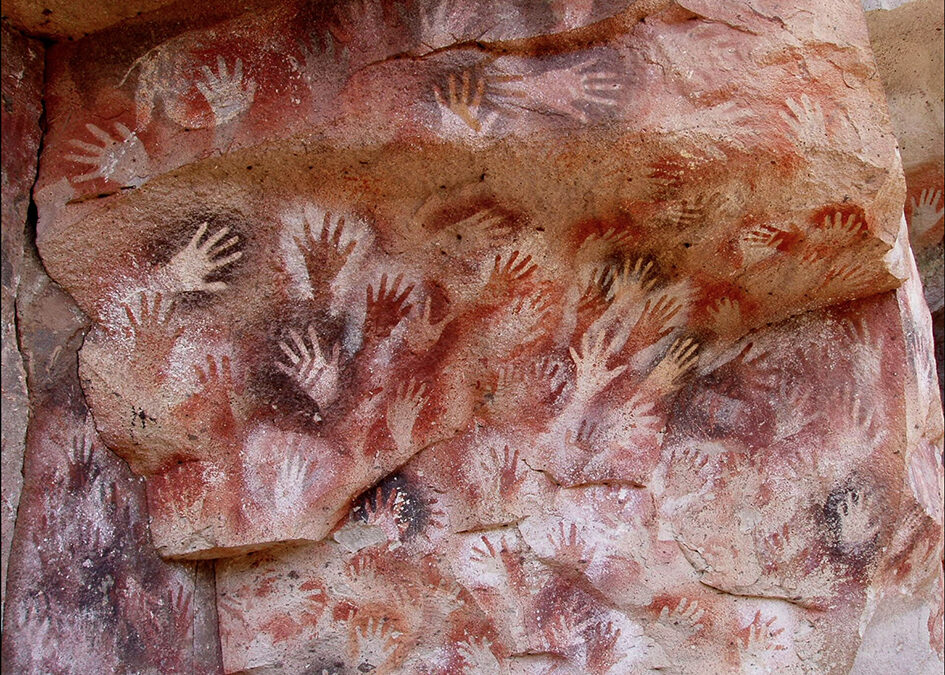
by Dawn King • The image for this article is of hands on a 9,000 year-old cave wall in Argentina. Isn’t it wonderful, as though all those people are reaching out to us from the past. We have to wonder what inspired them.
Creative expression is part of our DNA. The greatest creative energy of all has manifested each of us, and enlivens our every breath, so how could we not be creatively expressive beings as well? Art in every form, whether story telling, shaping clay, creating a song, or decorating a cake, is part of being human.
Psychologists tell us that being creative is vital for our well being, and believe it’s a mechanism to help us cope with life and prepare for challenges. A story from the journal Frontiers in Psychology:
A student was severely depressed because her grades were very poor, and she felt hopeless. At art therapy she selected a black marker and colored her entire page black. After looking at it for a while, she commented that it looked “really dark and bleak.”
She looked around and grabbed some pink sculpting clay, then started making flowers: “You know what? I think maybe this reminds me of spring.”
“Through that session and through creating art,” says her art therapist, “the student was able to imagine possibilities and see a future beyond the present moment in which she was despairing and depressed.”
As Thomas Merton has written: “Art enables us to find ourselves and lose ourselves at the same time.“ Today we might call this “being in the zone,” transcending time and space. Christianne Strang, a professor of neuroscience at the University of Alabama Birmingham (and a former president of the American Art Therapy Association) says: “Creativity in and of itself is important for remaining healthy, remaining connected to yourself and connected to the world.”
Scientific studies have shown that the brain’s reward center (the medial prefrontal cortex) has increased blood flow when study participants engage in art. Researchers conclude that art could be helpful for improving health, overcoming addictive behaviors, as well as mood and eating disorders.
So what does creative expression do for us? 1. It clears our head; 2. Helps us make sense of our emotions; 3. Relaxes and calms us; 4. Affords us a different way to communicate; 5. Helps us imagine a more hopeful future—to solve problems and face situations; 6. Activates the reward center of our brain (the medial prefrontal cortex); 7. Lowers stress and anxiety (cortisol levels); 8. Lets you focus deeply.
It takes a little effort, but is well worth letting the creativity within you express itself. Do it for your own self-enjoyment, and you will be improving the happiness consciousness on the planet.